

Dry Underfloor Heating Modules: Efficient and Modern Heating Solution
August 7, 2025
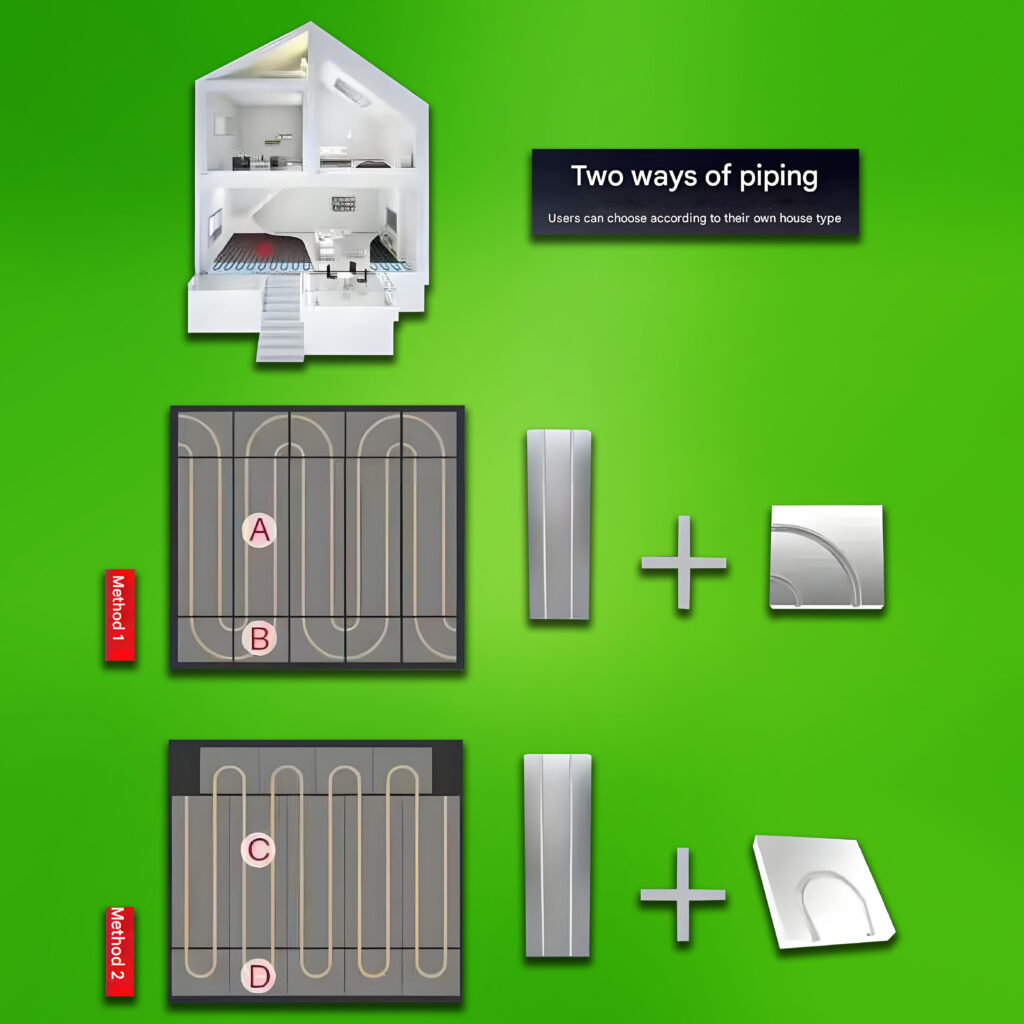
Introduction
Underfloor heating systems have gained popularity due to their energy efficiency, comfort, and space-saving benefits. Among the various types, **dry underfloor heating modules** stand out for their quick installation, excellent thermal performance, and compatibility with different floor coverings. These systems typically consist of **XPS insulation boards**, **floor heating radiant panels**, and **aluminum heat conduction layers**, ensuring optimal heat distribution and energy savings.
This article explores the key components and advantages of dry underfloor heating modules, focusing on the roles of **XPS insulation boards**, **radiant panels**, and **aluminum conduction layers** in enhancing system performance.
1. XPS Insulation Boards: The Foundation for Energy Efficiency
Extruded Polystyrene (XPS) insulation boards** are a critical component in dry underfloor heating systems. Unlike traditional wet systems that require a thick layer of screed, dry systems rely on XPS boards to provide:
– **High Thermal Resistance**: XPS has a low thermal conductivity (typically 0.028–0.034 W/mK), preventing heat loss downward and directing warmth upward into the room.
– **Moisture Resistance**: Unlike EPS (expanded polystyrene), XPS is highly resistant to water absorption, making it ideal for ground-floor installations.
– **Lightweight & Durable**: XPS boards are easy to handle and install while maintaining structural integrity under flooring loads.
– **Pre-Grooved Designs**: Many XPS boards come with pre-cut channels for heating pipes, simplifying installation and improving heat transfer efficiency.
By minimizing heat loss, XPS insulation ensures that the underfloor heating system operates at peak efficiency, reducing energy consumption.
2. Floor Heating Radiant Panels: Optimal Heat Distribution
The **radiant panels** in dry underfloor heating systems are designed to maximize heat emission while maintaining a low-profile structure. These panels are usually made from high-density materials that support even heat dispersion. Key benefits include:
– **Fast Heat-Up Time**: Unlike traditional wet systems that require heating a thick screed layer, dry radiant panels respond quickly due to their direct contact with the heating pipes.
– **Compatibility with Various Floor Finishes**: Whether using laminate, engineered wood, or tiles, radiant panels ensure uniform heat distribution without hot or cold spots.
– **Modular Design**: Many systems feature interlocking panels, allowing for quick installation and adaptability to different room layouts.
The combination of XPS insulation and radiant panels ensures that heat is efficiently transferred upward, enhancing comfort while reducing energy waste.
3. Aluminum Heat Conduction Layer: Enhancing Thermal Transfer
A crucial element in dry underfloor heating systems is the **aluminum conduction layer**, which sits atop the radiant panels. This thin but highly effective layer serves multiple purposes:
– **Superior Thermal Conductivity**: Aluminum conducts heat much faster than other metals, ensuring rapid and even heat distribution across the floor surface.
– **Reflective Properties**: Some aluminum layers include a reflective coating to further minimize downward heat loss, improving overall system efficiency.
– **Lightweight & Flexible**: The aluminum layer can be easily cut and shaped to fit around obstacles, making installation hassle-free.
By incorporating an aluminum conduction layer, dry underfloor heating systems achieve faster response times and more consistent warmth compared to traditional methods.
4. Advantages of Dry Underfloor Heating Modules
Compared to wet (screed-based) systems, dry underfloor heating modules offer several key benefits:
– **Faster Installation**: No need for drying times, allowing immediate use after installation.
– **Lower Floor Height Build-Up**: Ideal for retrofitting in existing buildings where floor height is a concern.
– **Energy Efficiency**: Reduced heat loss due to high-performance XPS insulation and aluminum conduction.
– **Compatibility with Heat Pumps**: Works efficiently with low-temperature heating sources, making it perfect for modern renewable energy systems.
Conclusion
Dry underfloor heating modules, incorporating **XPS insulation boards**, **radiant panels**, and **aluminum conduction layers**, represent a modern and efficient heating solution. These systems provide quick installation, superior thermal performance, and compatibility with various floor finishes, making them an excellent choice for both new constructions and renovations.
By optimizing heat distribution and minimizing energy loss, dry underfloor heating ensures a comfortable living environment while reducing heating costs—proving to be a smart investment for sustainable and efficient home heating.
